May 5, 2026
Digital Transformation vs Digitization: How AI Redefines the Enterprise
Digital Transformation
Digital Transformation
AI & Automation
Enterprise Strategy
Why digitization improves processes, while AI-driven digital transformation redesigns how enterprises compete.
Digital transformation has become one of the most frequently used phrases in business leadership. It is also one of the most misunderstood. Many companies describe themselves as digitally transformed after scanning documents, moving systems to the cloud, launching a new website, or replacing manual forms with online workflows. These activities may be valuable, but they are not transformation by themselves.
The difference matters because the cost of confusion is high. A company can digitize many processes and still operate with the same business model, the same decision speed, the same customer experience, and the same operational bottlenecks. Digitization improves how information is handled. Digital transformation changes how the enterprise creates, delivers, and captures value.
Artificial intelligence has made this distinction even more important. AI does not simply add another technology layer to the enterprise. When implemented properly, it changes how decisions are made, how workflows are designed, how customers are served, and how employees use data. This is why business leaders should treat AI not as a software feature, but as a strategic capability inside a wider transformation roadmap.
Digitization: Necessary but Operational
Digitization is the process of converting analog information into digital form. Examples include scanning contracts, turning paper invoices into electronic records, replacing printed forms with online submissions, or moving physical files into a cloud storage system. Digitization improves access, searchability, storage, and operational speed.
These improvements are useful. A digital invoice can be processed faster than a paper invoice. A digital contract can be searched, stored, and shared more easily than a printed document. A digital customer form can reduce manual data entry and support better recordkeeping.
However, digitization does not automatically change the logic of the business. It does not necessarily improve the customer journey, redesign internal accountability, create new revenue models, or make the organization more intelligent. In many cases, digitization simply makes an old process faster while leaving the process itself unchanged.
Business Activity | Digitization Outcome | Strategic Limitation |
|---|---|---|
Scanning paper contracts | Easier storage and retrieval | Contract approval may still be slow and manual. |
Moving spreadsheets to cloud storage | Better access across teams | Data may still be fragmented and inconsistent. |
Creating online forms | Faster collection of information | The workflow after submission may remain inefficient. |
Replacing paper invoices with PDFs | Reduced physical handling | Finance decisions may still rely on delayed reporting. |
Digitization is therefore important, but it is not the destination. It is the foundation on which deeper transformation can be built.
Digital Transformation: Strategic Reinvention, Not IT Modernization
Digital transformation is the redesign of business models, operating structures, customer engagement, and decision-making through digital capabilities. It is not limited to the IT department. It involves leadership, operations, finance, sales, marketing, customer service, data governance, talent development, and organizational culture.
McKinsey describes digital transformation as the rewiring of an organization with the goal of creating value by continuously deploying technology at scale.1 This definition is important because it moves the conversation away from technology installation and toward business value creation.
A digitally transformed organization does not only use digital tools. It changes how work flows across the enterprise. It connects data across departments. It measures performance differently. It uses automation where repetitive work slows growth. It gives leaders faster visibility into risks and opportunities. It designs customer experiences around convenience, personalization, and responsiveness.
The difference between digitization and transformation can be summarized simply:
Question | Digitization | Digital Transformation |
|---|---|---|
What changes? | Information format | Business model, workflow, decisions, and customer experience |
Primary goal | Efficiency and accessibility | Competitive advantage and value creation |
Typical owner | IT or operations | Executive leadership and cross-functional teams |
Main risk | Automating isolated tasks | Redesigning without strategy, governance, or adoption |
Best result | Faster existing processes | Better operating model and stronger market position |
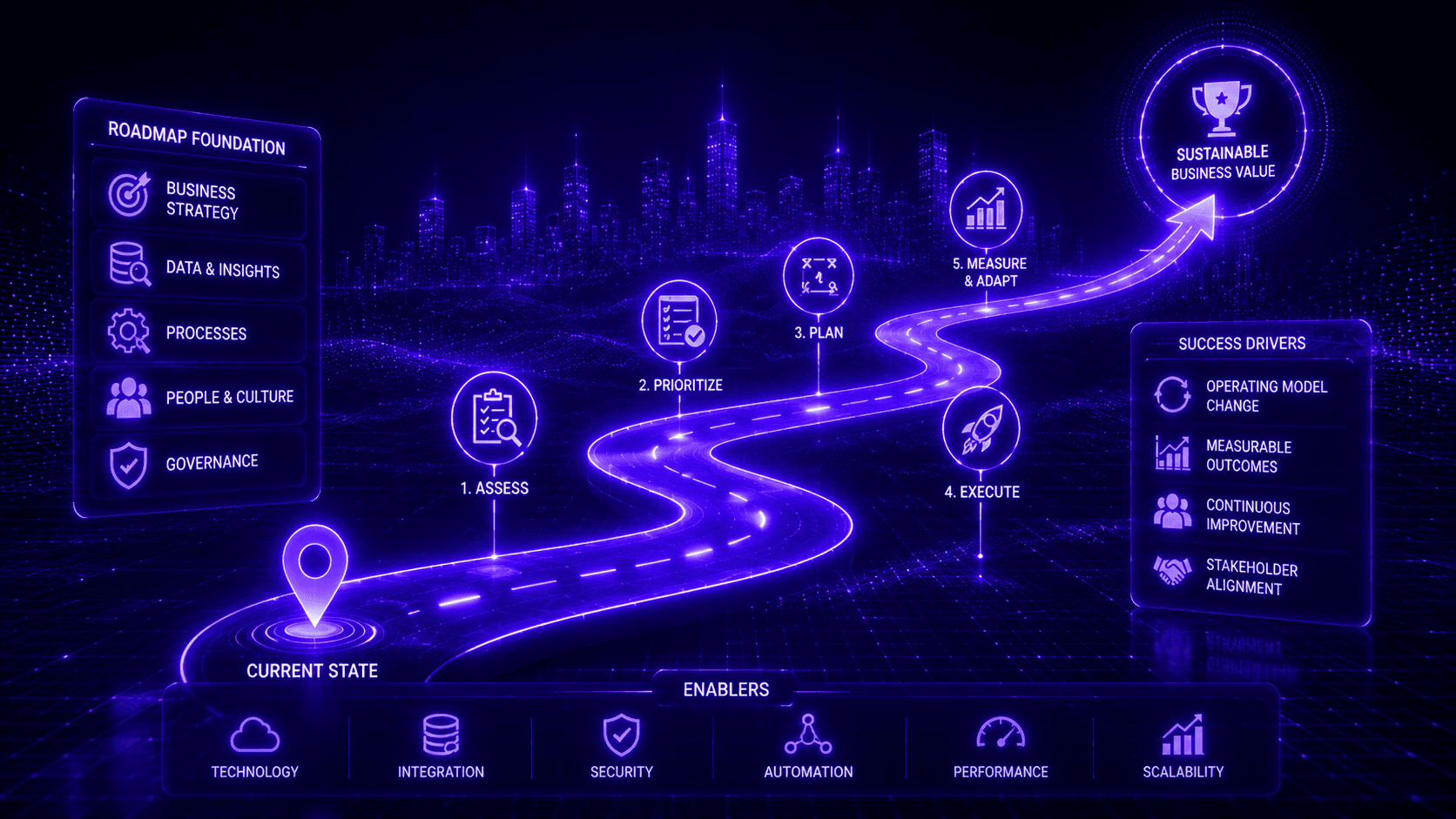
Transformation succeeds when leadership connects technology investment to strategic outcomes. It is not enough to ask, “Which system should we buy?” The better question is, “Which business capability must we build, and how should technology, data, people, and governance work together to support it?”
Why the Distinction Matters for Boards and CEOs
For boards and CEOs, the distinction between digitization and transformation is not academic. It directly affects investment decisions, performance measurement, organizational design, and risk management.
When executives mistake digitization for transformation, they may approve isolated projects that improve local efficiency but do not change enterprise performance. A department may adopt a new tool, another team may automate a narrow workflow, and a third team may build a dashboard. Each project may appear successful on its own, yet the organization as a whole may remain fragmented.
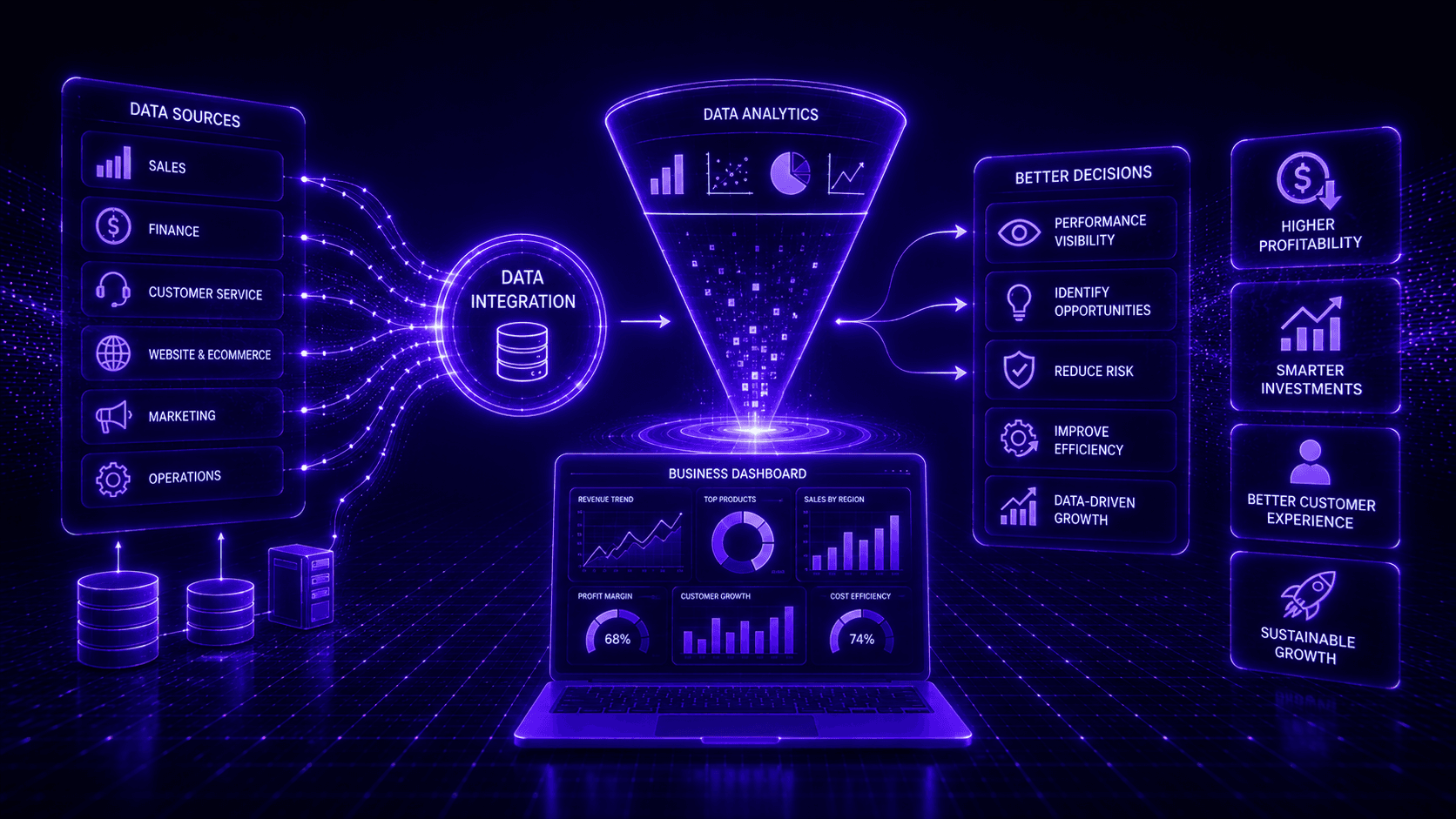
True transformation changes the enterprise at a structural level. It can reshape revenue logic through subscription services or digital platforms. It can reduce cost through intelligent automation. It can improve decision velocity through real-time analytics. It can deepen customer relationships through personalized digital engagement. It can also make the organization more resilient by improving visibility across operations.
Executive principle: Digitization optimizes existing processes. Digital transformation redesigns how the company competes.
This principle is especially relevant for growing companies in Europe and the Middle East, where customers increasingly expect reliable digital experiences, faster service, secure online interactions, and data-informed decision-making. Companies that only digitize may appear modern on the surface while still operating with slow, disconnected, and manually controlled processes underneath.
Artificial Intelligence: The Inflection Point
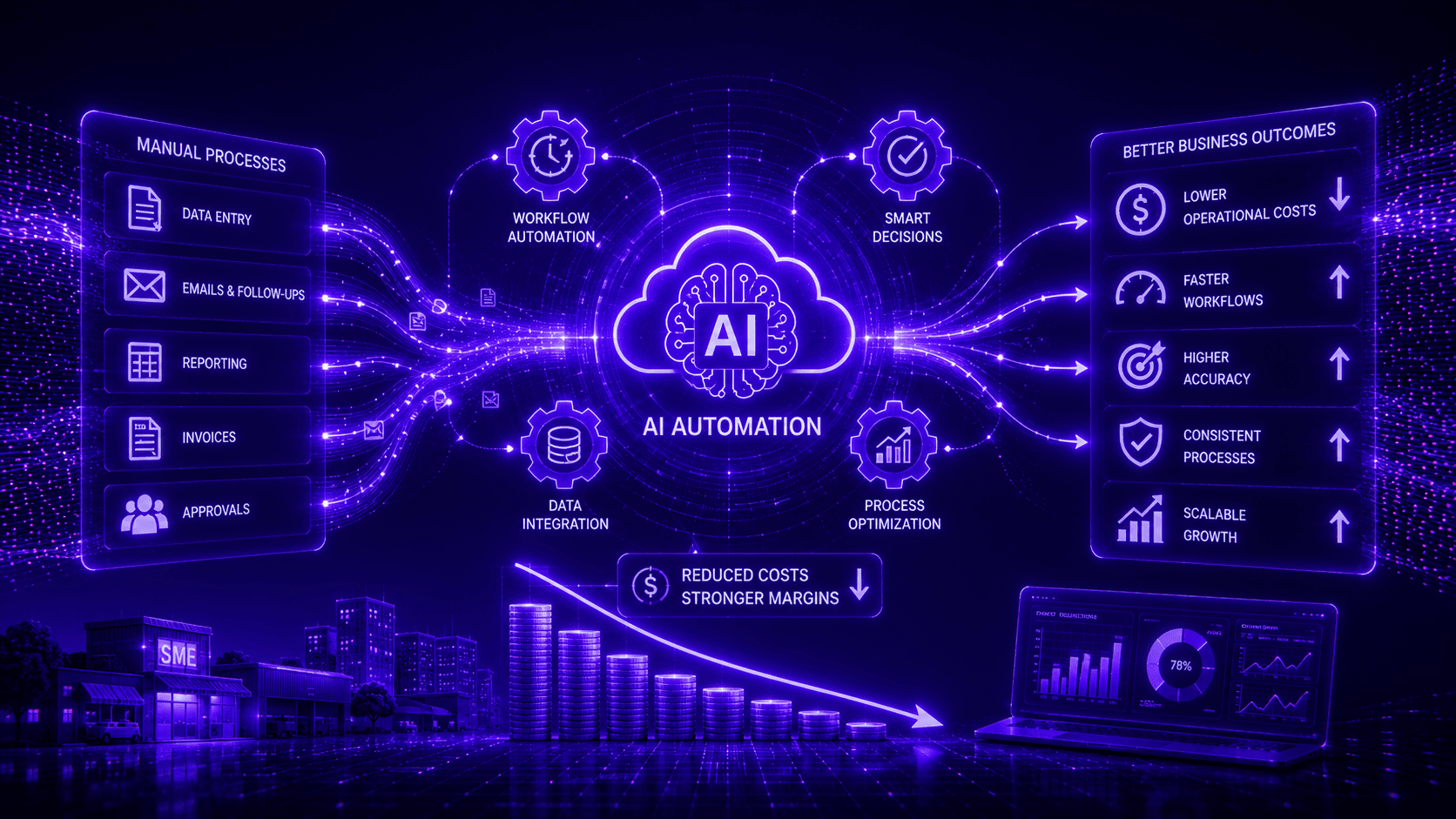
Artificial intelligence introduces a qualitative shift in the transformation journey. Earlier waves of digital change focused heavily on connectivity, cloud migration, workflow systems, and process automation. AI adds the ability to learn from data, identify patterns, generate recommendations, predict outcomes, and assist or automate decisions.
Deloitte’s enterprise AI research reports that organizations are using AI for productivity, decision-making, cost reduction, customer relationships, innovation, and revenue growth, while also emphasizing that success depends on moving from ambition to activation.2 The same research notes that some organizations are using AI at a surface level, while others are redesigning key processes or deeply transforming products, services, and business models around AI.2
This distinction is critical. AI creates the most value when it is embedded into the work of the business, not placed beside it. A chatbot on a website may improve response speed, but it does not transform the enterprise if it is disconnected from customer data, service workflows, sales follow-up, and management reporting. A predictive analytics model may be technically impressive, but it creates limited value if decision-makers do not trust it, act on it, or redesign processes around its outputs.
AI can support digital transformation in four major ways.
AI Capability | Business Impact | Example |
|---|---|---|
Predictive decision-making | Moves the company from reporting what happened to anticipating what may happen next | Forecasting demand, churn, equipment failure, or cash-flow pressure |
Intelligent automation | Automates repetitive or judgment-supported tasks | Invoice routing, customer triage, fraud detection, document classification |
Hyper-personalization | Improves customer experience using behavioral and contextual data | Personalized offers, tailored service journeys, dynamic content |
New business models | Turns products and services into intelligent digital offerings | AI-assisted diagnostics, smart maintenance, automated advisory tools |
AI therefore does not merely improve digital transformation. It raises the standard for what transformation means.
Why Many AI-Driven Transformations Fail
Many AI initiatives struggle not because the algorithm is weak, but because the organization is not ready to use it. AI depends on clean data, clear ownership, trusted governance, integrated systems, and employee adoption. Without these foundations, even advanced tools can produce limited results.
Deloitte highlights that governance, data readiness, workforce skills, and workflow redesign are central issues in enterprise AI adoption.2 This aligns with what many companies experience in practice. The challenge is rarely only technical. It is organizational.
A company may have customer data, but if that data is fragmented across sales, finance, support, and marketing systems, AI cannot easily produce a reliable customer view. A company may deploy automation, but if teams do not redesign responsibilities around the new workflow, employees may continue using manual workarounds. A company may build dashboards, but if leaders still make decisions through informal reporting cycles, analytics will not change behavior.
The most common causes of weak transformation outcomes include disconnected data, unclear ownership, insufficient governance, limited employee training, resistance to algorithmic recommendations, and failure to redesign workflows around digital and AI capabilities.
Failure Pattern | What Usually Happens | Better Approach |
|---|---|---|
Technology-first implementation | Tools are purchased before business outcomes are clearly defined | Start with strategic priorities, pain points, and measurable value. |
Fragmented data | Departments maintain separate systems and definitions | Build a shared data model, governance rules, and integration roadmap. |
Pilot without scale | AI projects remain experiments and never enter core workflows | Design pilots with deployment, ownership, and adoption in mind. |
Weak change management | Employees see AI as a threat or extra burden | Train teams, clarify roles, and show how AI supports better work. |
No executive accountability | Transformation is delegated only to IT | Make transformation a leadership agenda with cross-functional ownership. |
AI layered on top of unchanged processes produces marginal improvement. AI embedded inside redesigned systems can produce structural advantage.
The Strategic Imperative
Digitization remains necessary. Without digital data, connected systems, and modern infrastructure, no company can build a serious AI-enabled operating model. But digitization alone is operational hygiene. It helps a company become more efficient, not necessarily more competitive.
Digital transformation is broader. It is the redesign of how the company works, serves customers, uses data, and makes decisions. AI is now the accelerator of that redesign. It helps organizations move from automation to augmentation, from delayed reporting to predictive insight, and from isolated systems to intelligent workflows.
The companies that will lead in the next decade will not be those that simply digitize the fastest. They will be the companies that treat data as a strategic asset, build governance into daily operations, train people to work with intelligent systems, and align leadership accountability with digital performance.
For executives, the practical question is not whether the organization has adopted digital tools. The question is whether those tools are changing the way the organization competes.
If your organization is digitizing processes but not yet transforming its operating model, Tech Hosters can help you define a practical AI and digital transformation roadmap. Explore our Digital Transformation, AI & Automation, and Data Analytics services, or contact Tech Hosters to discuss your next step.